Converse × Hello Kitty: Bringing a New Sense of Charm to Classic Sneakers
Converse has introduced its latest collaboration with Sanrio, unveiling the new Hello Kitty & Friends collection. Built around the iconic Chuck Taylor and Chuck 70 silhouettes, the collection extends beyond footwear to include apparel and accessories, presenting a complete lifestyle offering. Rather than treating Hello Kitty as a simple graphic element, the collaboration blends the heritage of Converse with one of the world's most recognizable cultural icons. The result is a collection that speaks not only to fans of the character, but also to consumers who appreciate timeless design, everyday wearability, and thoughtful storytelling.

More Than a Character
How Hello Kitty Became One of the World's Most Valuable Cultural Icons
Since making her debut in 1974, Hello Kitty has evolved far beyond the role of a children's character.
Over the past five decades, she has become one of the world's most successful licensed intellectual properties, expanding into fashion, beauty, home décor, travel, hospitality, technology, and luxury collaborations.
Few characters have maintained such remarkable cultural relevance while continuously attracting new generations of consumers.
One of Hello Kitty's greatest strengths lies in her ability to connect different age groups through shared memories and emotional attachment.
For Millennials, she represents childhood nostalgia and familiar moments from growing up.
For Generation Z, she has been rediscovered through the revival of Y2K fashion, vintage aesthetics, and social media culture, becoming a symbol of individuality rather than simply cuteness.
This ability to bridge generations has made Hello Kitty one of the fashion industry's most sought-after collaboration partners.
Brands today are no longer interested in characters simply because they are recognizable.
Instead, they seek intellectual properties that carry emotional value, cultural influence, and the ability to strengthen long-term brand identity.
Converse understands this shift exceptionally well.
With more than a century of footwear heritage, the brand has consistently balanced innovation with authenticity.
Rather than allowing Hello Kitty to overpower its classic sneaker identity, Converse carefully integrates the character into its timeless design language.
The collaboration feels natural because both brands share similar qualities.
They have endured changing trends, remained culturally relevant for decades, and continue to resonate with audiences of all ages.
More importantly, this partnership demonstrates that successful collaborations are no longer about placing two famous logos on a single product.
Instead, they are about creating a meaningful story that reflects the values of both brands while offering consumers an experience that extends beyond fashion itself.
Reinventing a Classic Without Changing Its DNA
How Converse Balanced Heritage with Contemporary Character Design
One of the most impressive aspects of this collaboration is its restraint.
Instead of covering every product with oversized character graphics, Converse chose to preserve the timeless identity of its signature silhouettes.
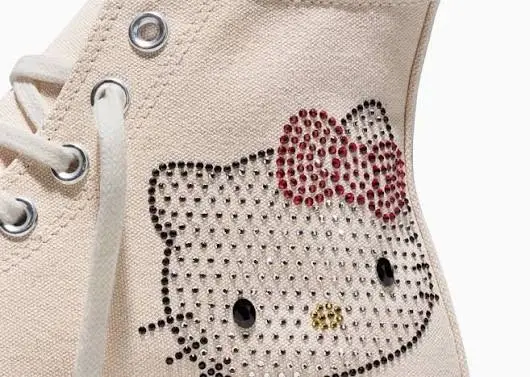
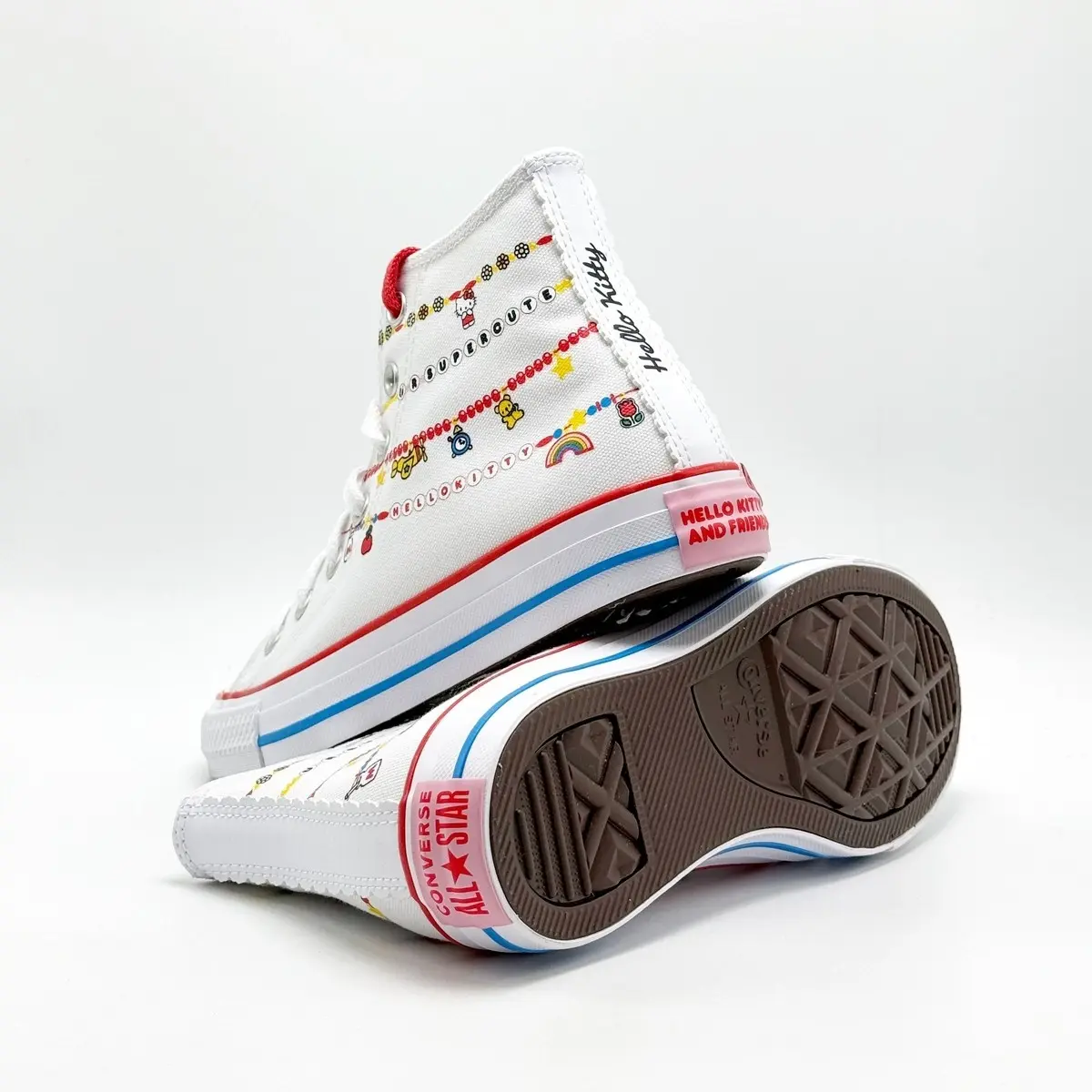
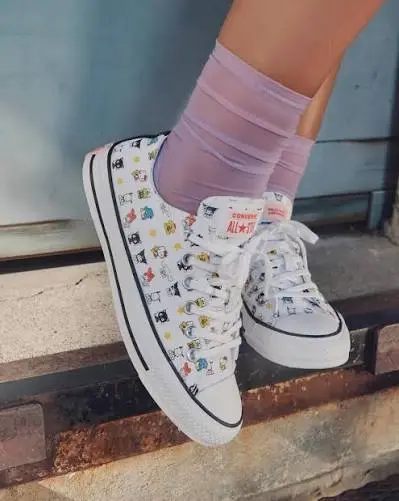
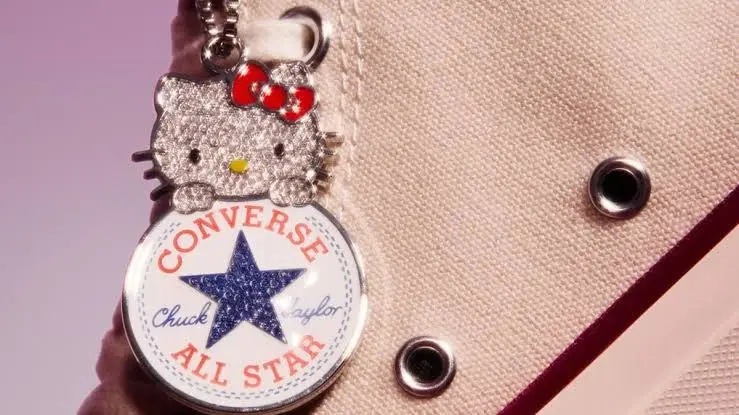
The Chuck Taylor and Chuck 70 remain instantly recognizable, while Hello Kitty is introduced through subtle embroidery, carefully placed illustrations, custom patches, and playful detailing.
This design approach reflects a growing trend within the global fashion industry.
Today's consumers increasingly appreciate collaborations that respect a brand's original identity rather than completely transforming it.
Successful partnerships no longer rely on visual excess.
Instead, they focus on thoughtful storytelling, premium craftsmanship, and products that naturally fit into everyday wardrobes.
The collection's neutral color palette further reinforces this philosophy.
Classic shades of black, white, cream, and soft red allow the character elements to stand out without overwhelming the overall design.
As a result, the sneakers remain versatile enough for daily wear while still offering collectors something unique.
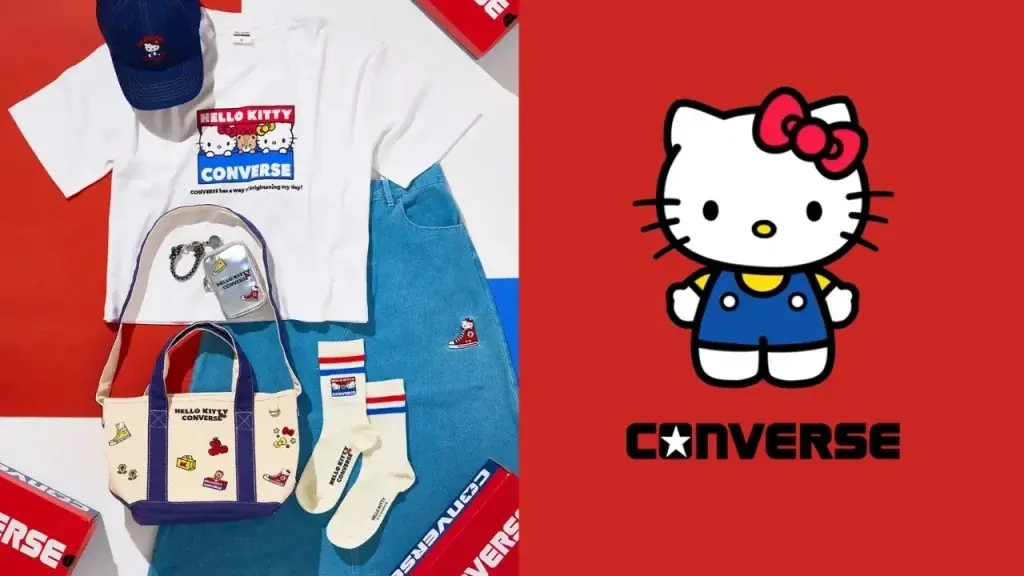
Beyond footwear, the collaboration expands into apparel and accessories, including graphic T-shirts, hoodies, tote bags, caps, and socks.
Rather than encouraging consumers to purchase a single item, Converse presents a complete lifestyle collection that allows wearers to build an entire look around the collaboration.
This strategy reflects a broader shift in fashion retail.
Consumers today are less interested in buying isolated products.
They are looking for complete brand experiences that express their personality, interests, and lifestyle.
By extending the collaboration across multiple product categories, Converse transforms the collection from a limited-edition release into a cohesive fashion story.
Why Character Collaborations Continue to Shape Global Fashion
Consumers Are Buying Stories, Not Just Products
Character collaborations have become one of the most effective branding strategies in today's fashion industry.
Their success, however, is not driven solely by the popularity of the characters themselves.
It comes from the emotional connections they create.
Modern consumers rarely make purchasing decisions based only on functionality or price.
They are increasingly influenced by identity, memories, shared values, and cultural experiences.
Products that carry emotional meaning often generate stronger customer loyalty than those defined only by design or performance.
Hello Kitty represents comfort, optimism, and familiarity.
Converse represents creativity, individuality, and self-expression.
Together, these two identities create a narrative that feels authentic rather than commercially manufactured.
Social media has amplified this effect even further.
Every collaboration now becomes content.
Consumers share styling ideas, unboxing videos, reviews, and personal interpretations across Instagram, TikTok, Threads, and other platforms.
The product is no longer the final destination.
Instead, it becomes the starting point for conversations, communities, and user-generated storytelling.
For brands, this creates value far beyond immediate sales.
A successful collaboration strengthens brand awareness, introduces new audiences, encourages repeat engagement, and reinforces long-term cultural relevance.
This explains why global fashion companies continue investing heavily in partnerships with entertainment IPs.
The goal is not simply to release another limited-edition product.
It is to build lasting relationships with consumers through shared experiences and meaningful stories.
Seoul Moment Insight
Great Collaborations Are Built on Shared Stories, Not Shared Logos
Looking at today's fashion industry, one thing has become increasingly clear.
The most successful collaborations are no longer defined by the size of the brands involved.
Instead, they are measured by how naturally two identities come together to create something meaningful.
For years, collaborations were often driven by hype.
Brands placed two recognizable logos on a product, released it in limited quantities, and relied on scarcity to generate demand.
While this approach created excitement, many of those collections quickly faded once the initial buzz disappeared.
Today's consumers expect something different.
They are looking for authenticity.
They want collaborations that feel intentional, not manufactured.
The Converse × Hello Kitty collection succeeds because neither brand compromises its own identity.
Converse remains true to its heritage of timeless sneaker design and self-expression.
Hello Kitty continues to represent optimism, familiarity, and emotional connection across generations.
Rather than competing for attention, the two brands complement one another.
This balance creates a collaboration that feels both fresh and timeless.
It appeals to long-time Converse enthusiasts, dedicated Hello Kitty collectors, and younger consumers discovering both brands for the first time.
Perhaps the most important lesson from this partnership is that successful collaborations are no longer about products alone.
They are about building emotional relationships.
Consumers remember how a collaboration makes them feel far longer than they remember a product's specifications.
For Korean fashion brands, this presents an important opportunity.
Korea possesses some of the world's strongest cultural assets, including K-pop, webtoons, gaming, animation, character IPs, and entertainment franchises.
Rather than viewing these as separate industries, fashion brands can transform them into long-term creative partnerships that resonate with global audiences.
The future of collaboration belongs to brands capable of creating stories that consumers genuinely want to become part of.
Fashion is no longer simply about clothing.
It has become a platform for culture, identity, and emotional connection.
That is precisely why collaborations like Converse × Hello Kitty continue to capture the attention of the global fashion industry.